Rødt Lys til Restitution: Fotobiomodulation med Paneler vs. Wearables – Evidens, Dosis og Usikkerheder
The Glow of Recovery: Why Active Adults Are Turning to Red Light
Picture this: You've crushed a brutal leg day, muscles screaming, that familiar ache settling in like an uninvited guest. Tomorrow's run looms, and you're desperate for faster rødt lys restitution. Enter fotobiomodulation—or PBM for short—a non-invasive light therapy buzzing in fitness circles. Using red and near-infrared (NIR) wavelengths, it promises to nudge your cells toward quicker bounce-back. But here's the catch: not all "red light" tools are created equal. Massive rødt lys paneler beam targeted photons, while trendy wearables, often reflective patches, play a different game. As an active adult eyeing the difference, let's unpack the evidens, dosing realities, and lingering fog.
Fotobiomodulation 101: How Red and NIR Light Works Its Magic
Fotobiomodulation taps into your mitochondria, those cellular powerhouses. Red light (around 630-700nm) and NIR (800-1000nm) penetrate skin and tissue, boosting ATP production, dialing down oxidative stress, and easing inflammation. Think of it as sunlight's precision cousin—without the UV burn.
For restitution post-workout, researchers probe reduced delayed-onset muscle soreness (DOMS), faster strength recovery, and even performance tweaks. Sessions typically last 10-20 minutes, but efficacy hinges on delivery: power output (irradiance in mW/cm²), total energy (fluence in J/cm²), and wavelength purity.
Rødt Lys Paneler vs. Reflective Wearables: The Stark Divide
Powerhouse Panels: Measured, Direct Light
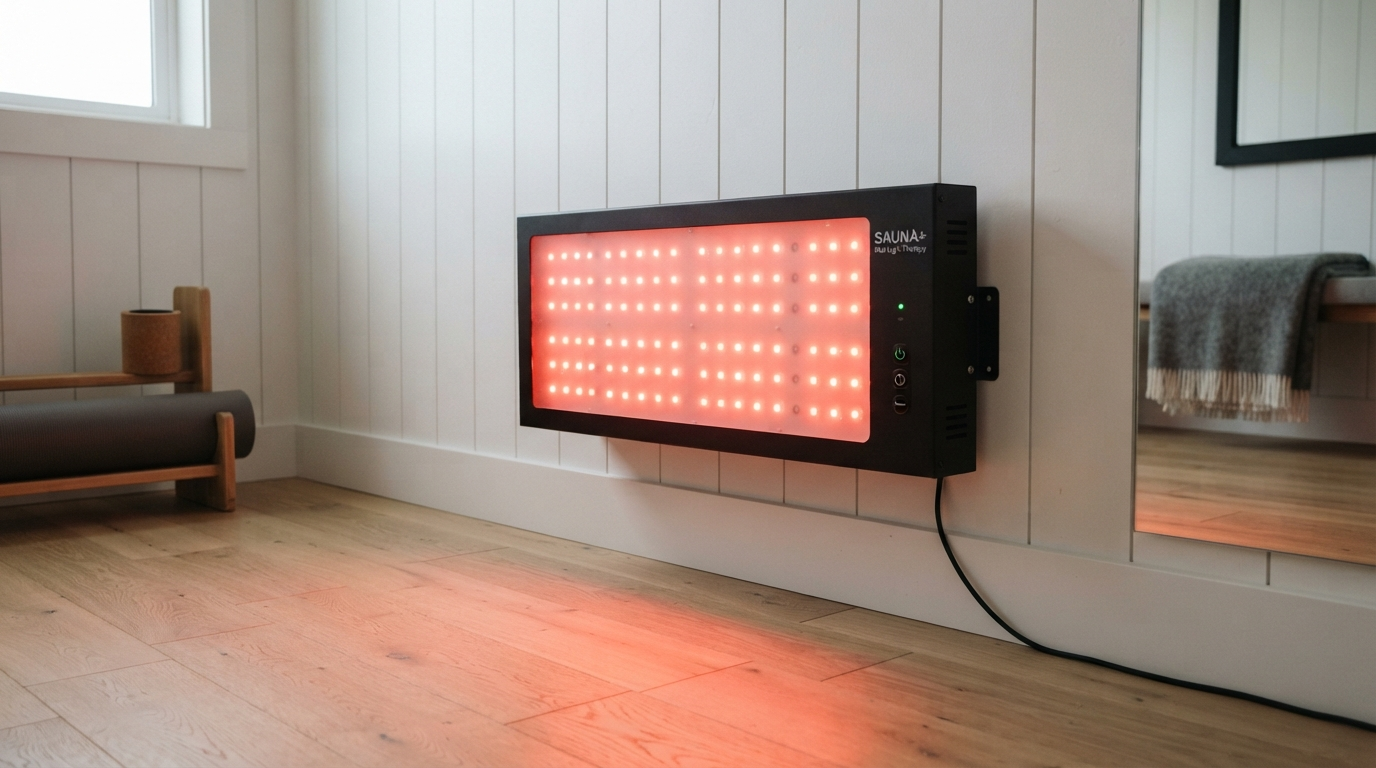
Enter rødt lys paneler: wall-sized LED arrays pumping 100+ mW/cm² at close range. Brands calibrate for clinical-grade doses—say, 20-60 J/cm² per session. You stand (or sit) in front, bathing sore spots in a red glow. This setup mirrors lab studies, where controlled beams hit targets precisely.
Wearables: Reflective Patches and the Ambient Gamble
Contrast that with wearables—those sleek, adhesive patches claiming rødt lys restitution via reflection. Made of nanostructured plastic, they supposedly bounce ambient light (even indoor LEDs) into red/NIR spectra. Stick one on your quad, go about your day. Sounds convenient, right? But here's the rub: no active emission. Intensity plummets to mere microwatts, doses unquantifiable without lab gear. Researchers note these rely on environmental light quality—dim office? Forget it.
Crucially, evidens for panels doesn't crossover. Panel trials use verified outputs; patch studies are sparse, small-scale, and often industry-tied. No head-to-heads yet prove wearables match panel punch.
Dosis Dilemmas: Quality Controls the Quest
Dose is king in fotobiomodulation. Too little? Yawn-worthy results. Too much? Potential biphasic dip—benefits tank. Panels shine here: user manuals specify distance, time, and fluence. A 1000W panel at 6 inches might deliver 50 J/cm² in 10 minutes.
- Panel perks: High irradiance (50-200 mW/cm²), full-body coverage, third-party tested spectra.
- Wearable woes: Estimated 0.1-10 mW/cm² from reflections; varies wildly by light source. No standard dosing protocols.
Quality flags? Cheap panels flicker with wrong wavelengths; dubious wearables lack certification. Always check irradiance specs and FDA clearance (Class II for many panels).
What We Know vs. What We Don't: The Evidence Ledger
What We Know (Primarily from Panels):
- Some meta-analyses show modest DOMS reduction (10-30%) and quicker recovery in athletes.
- Safe for most at proper doses; minimal side effects.
- Mitochondrial boosts confirmed in cell/animal models.
What We Don't Know:
- Long-term effects on humans?
- Wearable efficacy at real-world doses?
- Optimal protocols for diverse fitness levels?
- Interactions with meds or skin types.
No guarantees for restitution—individual mileage varies wildly.
Practical Plays: Safe Steps for Skeptical Seekers
Dip toes wisely. Start with panels from reputable makers—verify lab reports. Sessions: 3-5x/week, post-workout. Eyes closed, no staring. Wearables? Fun experiment, but pair with proven habits like sleep and nutrition.
- Consult a doc if photosensitive or on meds.
- Track personal response: soreness scales, performance logs.
- Avoid hype—rødt lys restitution aids, doesn't replace recovery basics.
Uncertainties linger, but curiosity fuels progress. Panels hold stronger evidens ground; wearables tempt with portability.
Your Next Glow-Up: Start Simple
Ready to test fotobiomodulation for yourself? Grab our free 7-day rødt lys guide—blueprints for safe panel sessions, wearable trials, and tracking templates. Illuminate your restitution smarter. Your muscles will thank you.