HRV og Pulsvariation: Sandheden om Restitution, Stress og Wearables
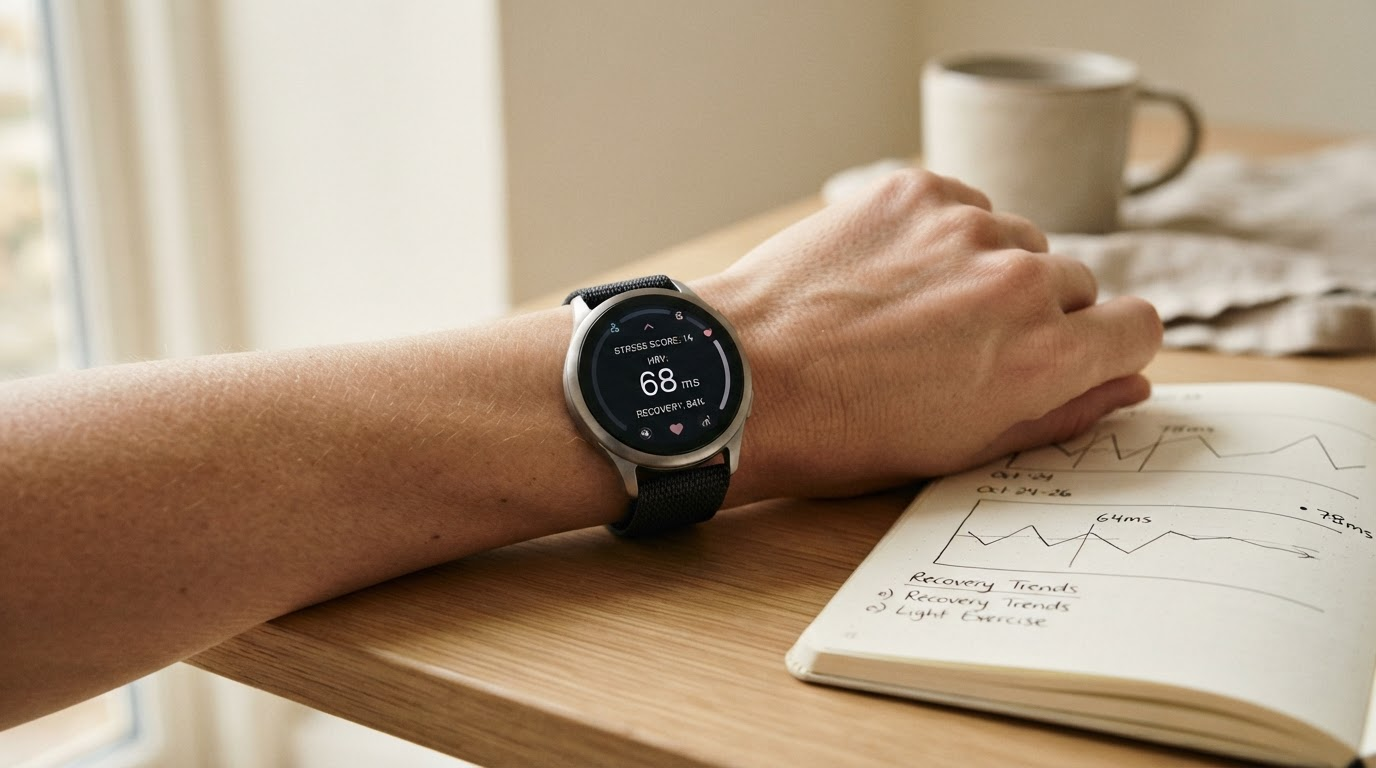
Picture this: It's 6 AM, your alarm hums softly, and you reach for your wearable. The app lights up with your overnight stats—HRV at 45 ms, down from yesterday's 52. A flicker of worry hits. Are you stressed? Overtrained? Or just... human? For many in their 40s and 50s juggling work, family, and fitness, heart rate variability (HRV, or pulsvariation in Danish) has become the go-to metric on wearables for gauging restitution and stress. But amid the buzz, what's the real story?
This isn't hype or gadget gospel. HRV offers genuine insights into your autonomic nervous system—but only if you understand its nuances. Let's unpack the evidence, cut through the noise, and arm you with practical wisdom for better energy and lifestyle balance.
What Is Heart Rate Variability (HRV)?
HRV isn't your average heart rate. It's the subtle, beat-to-beat variation in time between heartbeats—milliseconds that reveal how your body adapts. A healthy heart doesn't tick like a metronome; it flexes dynamically.
At its core, HRV reflects vagal activity, the parasympathetic "rest and digest" branch of your nervous system. Metrics like RMSSD (root mean square of successive differences) capture short-term variability tied to recovery. Higher HRV often signals better restitution, resilience to stress, and vagal tone. But it's no direct "stress score"—that's a common myth. HRV is a window into balance, not a panic button.
How Wearables Track HRV: PPG vs. Reality
The Measurement Challenge
Most wearables use photoplethysmography (PPG)—optical sensors flashing green light to detect blood flow. It's convenient for wrists, but less precise than electrocardiogram (ECG) gold standards used in clinics. PPG struggles with motion, skin tone, or loose fits, often over- or underestimating HRV.
Firmware varies wildly across devices, tweaking algorithms in ways that aren't always transparent. And forget frequency ratios like LF/HF—they're controversial, influenced by breathing, and poor predictors of stress in real-world studies.
- Best use: Overnight or resting HRV trends during sleep or steady states.
- Not for: Spot checks during runs, work, or diagnostics.
Disclaimer: Wearable HRV is not medical diagnostics. It's a trend tool, not a doctor's note.
What Influences Your HRV? Context Is King
HRV dances to life's rhythm. Posture alone can swing it 20-30%: lying down boosts it, standing drops it. Deep breathing elevates vagal tone; shallow pants suppress it. That morning coffee? Caffeine dampens HRV for hours. Alcohol lingers, slashing recovery even after a "light" night. Sleep phases matter too—REM dips HRV, deep sleep lifts it.
Age tempers expectations: HRV naturally declines from 30s onward, but consistent training preserves it. Illness, overreaching, or chronic stress erode it gradually.
What We Know for Sure About HRV, Restitution, and Stress
Trends Over Snapshots
Solid evidence links higher resting HRV to superior recovery, lower inflammation, and stress resilience. Athletes use nightly HRV to guide training loads—green for go, red for rest. For everyday warriors, it's similar: sustained drops signal accumulated fatigue.
Pair it with resting heart rate (RHR). HRV down + RHR up? Deeper restitution needed. But ignore one wild day—life's variables are too many.
What's Still Unclear—and How to Use HRV Wisely
Practical Baseline Building
- Establish a 2-4 week baseline during consistent sleep and habits.
- Focus on nightly averages in the same posture (e.g., morning lie-down).
- Combine with subjective cues: perceived energy, soreness, mood.
- Track trends weekly, not daily panics.
Uncertainties persist: Individual baselines vary wildly; no universal "good" score exists. Lifestyle factors like saunas or Zone 2 training boost HRV long-term, but protocols evolve. Dive deeper with our Zone 2 and sauna article.
Start simple: Grab our free 7-day HRV guide to build habits without overwhelm.
When to Talk to a Professional
HRV trends illuminate patterns, but persistent lows alongside exhaustion, irregular heartbeat, or anxiety warrant a doctor. It's a flag, not the verdict. Nordic restraint applies: observe calmly, act thoughtfully.
The Calm Truth on HRV and Your Wearable
HRV isn't magic, but it's a quiet ally for smarter restitution and stress navigation. Ditch the daily drama; embrace weekly wisdom. Your wearable whispers truths—listen with context, and reclaim steady energy amid life's pulse.